
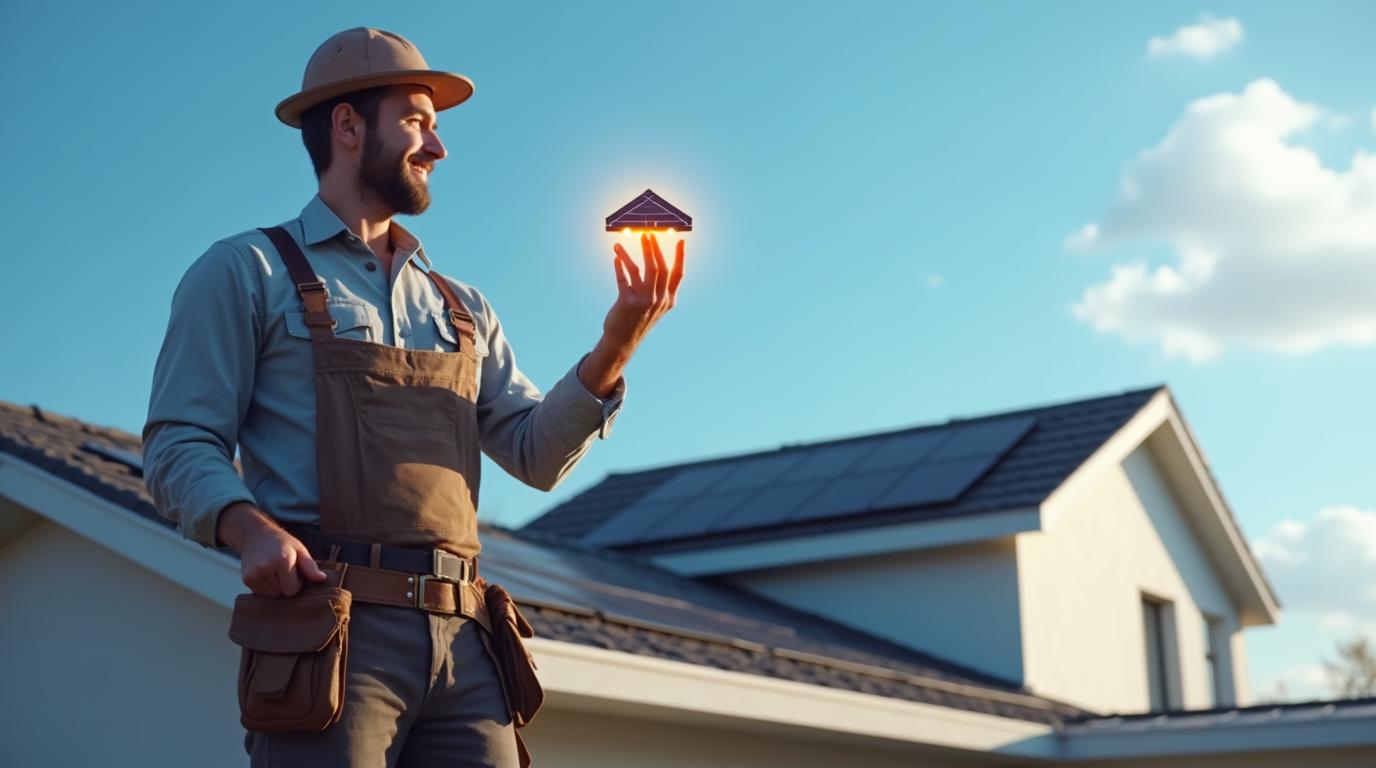
Solar Slate Tiles: Modern Energy & Classic Roofing Aesthetics - A 25-Year Roofer's Honest Guide
For over twenty-five years, my hands have felt the weight of countless roofing materials. I have installed traditional asphalt shingles on family homes. I have repaired historic slate roofs on century-old buildings. I have overseen the integration of bulky solar panels on modern constructions. Throughout my career, certified by the National Roofing Contractors Association (NRCA) and having completed thousands of projects across Texas, one question from homeowners has grown louder each year. How can we get clean energy without sacrificing the beautiful, classic look of our home? This article exists to answer that exact problem. It is born from direct experience with customer installations, deep dives into manufacturer specifications, and countless conversations with homeowners just like you who want the best of both worlds.
My purpose here is simple. I want to give you the complete, transparent picture of solar slate tiles. This guide will help you understand if this innovative product is the right fit for your home, your budget, and your energy goals. I will share not just the glossy brochure promises, but the real-world insights from the roof deck. We will cover how they work, what they truly cost, how they install compared to traditional options, and the practical realities of ownership. The information here comes from my team's hands-on work, analysis of industry data from sources like the Solar Energy Industries Association (SEIA), and a thorough review of building codes relevant to Texas homeowners. My methodology is straightforward: provide clear, actionable facts so you can make an informed decision with confidence.
What Are Solar Slate Tiles? The Contractor's Breakdown
Let's start with the basics. Solar slate tiles are not simply solar panels placed on a slate roof. They are an integrated roofing product. Each individual tile is both a weatherproof roofing material and a functioning solar electric cell. They are designed to replace your primary roof covering while generating electricity. From the street, they mimic the elegant, textured appearance of natural or synthetic slate. From the utility company's perspective, they are a power plant on your roof.
How They Actually Work: The Science Made Simple
The technology is brilliant in its integration. Each tile contains photovoltaic (PV) cells, typically made from monocrystalline silicon for high efficiency. These cells convert sunlight into direct current (DC) electricity. Wires run underneath the tiles, connecting them in a series within each roofing course. This wiring harness is then fed into an inverter, usually mounted in your garage or attic. The inverter's job is crucial. It converts that DC power into the alternating current (AC) electricity that your home appliances use. Any excess power your roof generates can often be sent back to the grid, potentially earning you credits on your bill through net metering programs offered by many Texas utilities.
Key Components of the System
- The Tiles Themselves: These are the building blocks. They must be durable, waterproof, and efficient. Leading manufacturers like GAF Energy with their Timberline Solar™ line and CertainTeed offer integrated products. Others, like Tesla Solar Roof, create a complete system with both active and inactive tiles.
- The Inverter: This is the brain of the operation. Modern systems often use microinverters (one per tile or small group) or a central string inverter. Microinverters can optimize each tile's output independently, which is helpful if part of your roof is shaded.
- The Mounting and Flashing System: This is where roofing expertise is non-negotiable. Proper integration with roof penetrations, valleys, and edges is critical to prevent leaks. The system must comply with local building codes, which in Texas often reference the International Residential Code (IRC) for roofing.
- Monitoring Software: Most systems include an app. This lets you track your energy production in real-time from your phone.
The Real Cost: Investment vs. Expense
This is the section homeowners scrutinize most. Let's be direct. A solar slate tile roof is a significant investment, not a simple replacement. You are paying for two major systems: a premium, long-lasting roof and a residential power generation system. The total cost depends heavily on your roof's size, pitch, complexity, and your energy needs.
Breaking Down the Price Tag
As of 2024, you can expect a ballpark figure of $25 to $40 per square foot for a fully installed solar slate system. For a typical 2,000-square-foot roof (which is about 20 "squares" in roofing terms), that translates to a total cost between $50,000 and $80,000. Compare this to a high-end synthetic slate roof at $15-$25 per square foot ($30k-$50k) plus a separate traditional solar panel system at $15,000-$25,000. The integrated solar slate system often comes in at a comparable or sometimes higher total when viewed as a combined roof and solar project.
Financial Incentives That Change the Math
The federal investment tax credit (ITC) is a major factor. As of this writing, it allows you to deduct 30% of the total system cost from your federal income taxes. This applies to both the roofing and solar components if it's an integrated product. For a $70,000 project, that's an immediate $21,000 credit. Some states and local utilities offer additional rebates. Always consult with a tax professional. Furthermore, the value is twofold. You gain energy independence and lock in a portion of your electricity costs for decades. You also add a modern, premium feature to your home that can increase its resale value, as noted by studies from the National Renewable Energy Laboratory (NREL).
A Real Project Example from Kingwood
Last spring, we worked with a family on their 1980s home. Their original asphalt roof was failing, and their monthly electricity bill averaged $280. They loved the look of historic homes but wanted modern efficiency. We installed a solar slate system. The total project cost was $68,500. After the 30% federal tax credit, their net investment was $47,950. Their electric bill now averages $25 (the basic service fee). They are saving over $3,000 annually on energy. At that rate, the system pays for its net cost in roughly 16 years, well within the 25+ year warranty period of the tiles. For them, the aesthetic upgrade and immediate bill reduction provided immense value beyond the simple payback period.
Materials & Aesthetics: Hands-On Comparison
Not all "slate" is created equal. When considering solar slate, you're really choosing between different base materials that have solar cells embedded or attached.
Types of Solar Slate Materials
- Polymer-Composite Base: Many systems use a durable, lightweight polymer that mimics the texture and color variation of slate. It's impact-resistant and often carries strong warranties. This is what you'll find in systems like GAF Energy's.
- Metal or Stone-Coated Steel Base: Some tiles use a metal substrate for strength, coated with stone granules for aesthetics and weather resistance.
- Integrated Glass Tiles: Systems like Tesla's use tempered glass tiles. Some are active (with PV cells), and some are inactive, allowing for a seamless look across the entire roof plane.
The Aesthetic Result: Curb Appeal Analysis
This is the primary win for most homeowners. A well-installed solar slate roof has a uniform, low-profile appearance. There are no bulky racks or large panels creating shadows and visual clutter. The color is typically a dark gray or black with subtle variation, blending beautifully with many architectural styles from Tudor to modern farmhouse. From the ground, it is very difficult to distinguish it from a high-quality synthetic slate roof. This preserves, and often enhances, your home's architectural integrity.
The Installation Process: A View from the Roof Deck
Installation is where your choice of contractor matters most. This is not a DIY project. It requires a team skilled in both precision roofing and electrical systems. The process typically follows these steps, based on our field experience.
Step-by-Step Installation Overview
1. Initial Assessment & Engineering: A qualified installer will conduct a thorough roof inspection, evaluate your structural framing, and assess your electrical panel. They will design a system layout to maximize sun exposure, often using satellite imagery tools.
2. Tear-Off & Deck Preparation: The old roofing material is completely removed. The roof deck is inspected for damage and repaired. A high-quality synthetic underlayment is installed as a secondary water barrier. This step is critical and identical to preparing for any premium roof.
3. Flashing & Integration: All metal flashing—at valleys, walls, chimneys, and vents—is installed first. For solar slate, special attention is paid to how the wiring harnesses will exit the roof plane at the ridge or eave, using watertight conduit boots.
4. Tile Installation & Wiring: Tiles are installed course by course, starting at the eave. As they go on, electricians connect the pre-wired tabs or leads from each tile, building the electrical circuit within the roof itself. This requires meticulous coordination between the roofing and electrical crews.
5. Inverter & Electrical Tie-In: The main wiring harness is connected to the inverter. A licensed electrician then connects the inverter to your home's main electrical panel. This work usually requires a permit and inspection from your local building department.
6. System Activation & Monitoring: Once the city inspector signs off, the system is activated. The installer will help you set up the monitoring app and explain the system's operation.
Why Contractor Certification is Non-Negotiable
Manufacturers like GAF and Tesla have rigorous certification programs for installers. These programs train crews on the specific waterproofing details, electrical connections, and safety protocols unique to their products. Hiring a certified installer is your strongest assurance of a proper installation that will honor the product's long warranty. It also often means the installer can pull the necessary electrical and roofing permits seamlessly.
Long-Term Performance & Homeowner Considerations
Once installed, what should you expect? How does owning a solar slate roof differ from a traditional roof?
Durability and Weather Resistance
These systems are engineered to be tough. Most carry Class 4 impact resistance ratings (the highest) for hail, which is vital in Texas. They are also rated for high wind speeds, often exceeding 130 mph. The integrated nature means there are no racking systems that can be compromised by wind. However, if a tile is physically damaged, replacement requires both roofing and electrical expertise. It's not as simple as swapping a shingle.
Maintenance and Cleaning
Maintenance is generally low. You should visually inspect your roof after major storms, just as with any roof. To maintain optimal energy production, the tiles need to be relatively clean. In most climates, rainfall is sufficient. In very dusty areas or under overhanging trees, occasional gentle cleaning with a soft brush and water may be needed. Never use a pressure washer, as it can damage the seals and electrical connections.
Understanding the Warranties
Warranties are multi-layered and must be read carefully.
- Weatherproofing Warranty: This covers leaks and material defects, typically for 25 years or more.
- Power Output Warranty: This guarantees the solar cells will produce a certain percentage of their original output (e.g., 90% after 25 years).
- Inverter Warranty: Often 10-25 years.
- Workmanship Warranty: Provided by your installer, usually for 5-10 years, covering installation errors.
Ensure you understand who to call—the installer or the manufacturer—for different types of issues.
Frequently Asked Questions from Real Homeowners
1. Can I install solar slate tiles on my existing roof?
Almost never. These are a primary roofing material. They require a solid, prepared deck. Installing them over old shingles would void warranties and create installation and fire safety issues. They are designed as a full roof replacement solution.
2. What happens if my roof is shaded for part of the day?
Modern systems with microinverters handle partial shading very well. Only the shaded tiles will see reduced output, not the whole string. Your installer's design should focus the active tiles on the south-facing, unshaded portions of your roof, using inactive tiles on heavily shaded sections.
3. Do they work during a power outage?
Standard grid-tied systems automatically shut off during an outage for safety reasons, to prevent sending power back to the grid while utility workers are making repairs. To have power during an outage, you need to add a dedicated battery backup system, like a Tesla Powerwall.
4. How do I handle roof repairs or re-roofing in the future?
This is a key consideration. Future work requires a specialist familiar with the specific product. Always keep your installation records and warranty information in a safe place. If you need to add a dormer or skylight later, a certified technician will need to de-energize and properly flash around the new penetration.
5. Will my homeowners insurance go up?
It might, but often not significantly. You should absolutely notify your insurance carrier. You are adding a high-value improvement to your home. Some insurers may offer a discount for impact-resistant roofing materials. The key is to provide them with the manufacturer's specification sheets showing the wind and hail ratings.
6. Are they suitable for all roof pitches?
Most systems require a minimum pitch, typically 3:12 or greater, to ensure proper water runoff. They can be installed on steeper pitches as well. Very low-slope or flat roofs are not candidates for this type of integrated system.
7. How do I know if my roof structure is strong enough?
A qualified installer will perform a structural assessment. Solar slate tiles are often comparable in weight to other premium roofing materials like concrete tile or natural slate. If your home was built to modern codes, it likely has sufficient strength. Older homes may need reinforcement, which your contractor can manage.
Conclusion: Is a Solar Slate Roof Right for You?
Solar slate tiles represent a fascinating and beautiful convergence of form and function. They solve the aesthetic dilemma for homeowners who desire solar power but cherish their home's traditional or elegant appearance. They are a premium product with a premium price tag, but one that delivers two critical services: long-term protection and clean energy generation.
Your next steps should be practical. First, assess the age and condition of your current roof. If it needs replacement in the next 2-5 years, you are in the ideal window to consider this option. Second, gather 2-3 quotes from manufacturer-certified installers in your area. Ask to see completed projects and talk to past customers. Third, run the financial numbers for your specific home, factoring in incentives and your current energy costs. Finally, choose a partner you trust. This is a 30-year investment in your home's integrity, efficiency, and beauty. The right information, combined with expert installation, can make your roof a source of pride, savings, and sustainability for decades to come.