
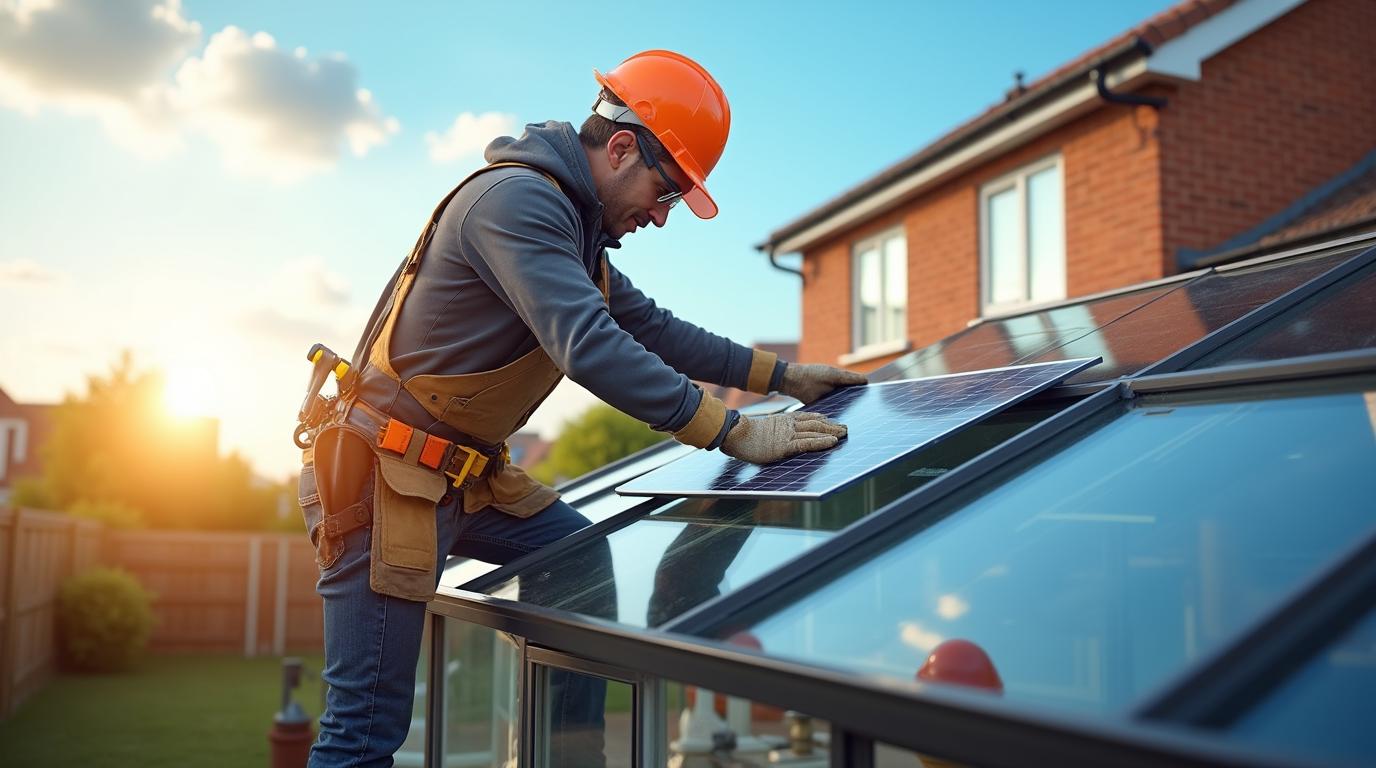
Solar Panels for Conservatory Roof: A Roofer's Guide to Smart Energy & Protection
For over fifteen years, I've worked on thousands of roofing projects across Texas. I hold certifications from the National Roofing Contractors Association (NRCA) and am a GAF Master Elite contractor. This hands-on experience has taught me what truly works for homeowners. I've installed and repaired countless conservatory roofs. This article exists because homeowners often ask me about adding solar panels to their conservatories. They want to know if it's a good idea. They worry about leaks, costs, and structural issues. This guide answers all those questions with real-world contractor insight. The information comes from actual customer projects I've managed. It also comes from manufacturer specifications and local building codes. My goal is to give you clear, honest advice. I want to help you make an informed decision without sales pressure.
Many homeowners see their conservatory as a sunroom or extra living space. It gets hot in the summer and can be expensive to cool. Adding solar panels seems like a perfect solution. It can generate electricity and provide shade. However, a conservatory roof is different from a standard house roof. The structure, materials, and installation methods are unique. A poor installation can lead to major water damage and costly repairs. I will walk you through every step of the process. You will learn about the benefits, the risks, and the real costs. You will get practical tips from my years in the field. This is not just theory. This is roofing knowledge gained from getting on ladders and solving problems.
Understanding Your Conservatory Roof Structure
Before considering solar panels, you must understand your roof. A conservatory roof is typically a lightweight structure. It often uses aluminum or uPVC frames with polycarbonate or glass panels. This is very different from a traditional timber-framed roof with shingles. The weight capacity is usually lower. The attachment points for solar mounting systems are not always present. You need to assess if your roof can handle the extra load. This includes the weight of the panels, the mounting hardware, and potential snow accumulation. Always consult the original manufacturer's specifications for your conservatory. You can find this information in your homeowner's manual or by contacting the company.
Material Compatibility and Weight Limits
Polycarbonate and glass conservatory roofs have specific limitations. Polycarbonate is a plastic material. It can become brittle over time with UV exposure. Adding heavy clamping systems can cause stress cracks. Glass panels are stronger but can still be problematic. The seals around the glass are critical for waterproofing. Drilling into the frame to mount solar racks can compromise these seals. The average solar panel weighs between 40 and 50 pounds. A full array can add hundreds of pounds to your roof structure. This weight is not just static. Wind can create uplift forces that stress the attachments. A structural engineer should evaluate your conservatory before any installation. This is a crucial step many DIY guides skip.
Common Conservatory Roof Types
There are several common conservatory designs. Each has different considerations for solar installation. A lean-to conservatory has a single-sloped roof attached to your main house. A Victorian conservatory has a multi-faceted, often curved, roof. An Edwardian conservatory has a simpler, rectangular plan with a ridged roof. The shape affects how many panels you can fit and how they are angled. South-facing roofs in the Northern Hemisphere get the most sun. East or west-facing roofs will produce less energy. The pitch, or slope, of your roof also matters. A very shallow pitch may not allow for optimal panel tilt. It can also lead to debris accumulation on the panels. You must clean them regularly for maximum efficiency.
The Real Benefits: More Than Just Electricity
Installing solar panels on your conservatory offers several advantages. The primary benefit is generating your own clean electricity. This can reduce your monthly utility bills significantly. In Texas, with abundant sunshine, the payback period can be attractive. Solar panels also provide secondary shading for your conservatory. This can reduce the 'greenhouse effect' that makes these rooms so hot in summer. By blocking direct sunlight, the panels help keep the space cooler. This reduces the load on your air conditioning system. It makes the room more usable year-round. Furthermore, high-quality solar installations can protect the underlying roof material from UV degradation and weather. They act as a shield.
Energy Production and Financial Incentives
The amount of electricity you generate depends on several factors. Panel efficiency, roof orientation, and local weather are key. You can use the National Renewable Energy Laboratory's (NREL) PVWatts Calculator to estimate production. Financially, the federal solar Investment Tax Credit (ITC) allows you to deduct a percentage of the system cost from your taxes. Texas also has property tax exemptions for residential solar energy systems. Some utility companies offer net metering programs. This means you can sell excess power back to the grid. These incentives improve the overall return on investment. Keep all receipts and documentation for your tax professional.
Thermal Regulation and Added Protection
From a roofing perspective, the shading effect is a major benefit. Conservatory roofs are designed to let light in. This often makes them heat traps. Solar panels mounted a few inches above the roof create an air gap. This gap allows for passive ventilation. Heat can escape, cooling the roof surface below. The panels also protect the polycarbonate or glass from hail, falling branches, and UV rays. This can extend the life of your conservatory roof materials. It is a form of preventive maintenance. However, this only works if the installation does not itself cause damage. Proper mounting is everything.
Critical Installation Considerations and Risks
This is the most important section. How the panels are attached determines the success or failure of the project. The biggest risk is water leakage. Conservatory roofs are notorious for developing leaks at joints and seals. Drilling new holes into the frame is a major risk factor. Any penetration must be properly sealed with high-grade, UV-resistant sealants. I recommend using non-penetrating mounting systems whenever possible. These systems use weighted bases or clamp onto the existing structure without drilling. They are ideal for glass or polycarbonate roofs. However, they must be heavy enough to resist wind uplift. You must also ensure they do not scratch or damage the roof surface.
Waterproofing and Flashing Details
If drilling is unavoidable, the waterproofing details are critical. Each mounting foot must have a custom-fabricated flashing. This is a metal or rubber piece that seals the penetration. It must be integrated with the existing roof system. For a polycarbonate sheet roof, this is very difficult. The thermal expansion and contraction of plastic differs from metal flashing. This can break the seal over time. For glass roofs, the mounting point should ideally land on a structural member of the frame, not the glass itself. All sealants should be compatible with both the frame material (aluminum, uPVC) and the panel material. I always use sealants recommended by the conservatory manufacturer. Check their website for technical bulletins.
Wind Load and Structural Integrity
Texas experiences high winds. Your solar array must be engineered to withstand them. The mounting system must be rated for your local wind speed zone. You can find this information in your local building codes or from the International Code Council. The entire system—panels, racks, and attachments—must transfer wind forces safely to the conservatory frame. The frame must then transfer these forces to the ground. A lightweight conservatory may not be designed for these additional lateral loads. This is why a structural review is non-negotiable. Do not rely on the solar installer's opinion alone. Get a stamped report from a licensed structural engineer.
Cost Analysis: A Real Project Breakdown
Costs vary widely based on system size, panel quality, and installation complexity. For a typical conservatory, a 2kW to 4kW system is common. As a rough estimate, a professionally installed system can cost between $15,000 and $25,000 before incentives. This is often more per watt than a standard roof installation. The reason is the custom engineering and specialized labor required. Let's break down a real project example from last year. The homeowner had a 12' x 10' Edwardian conservatory with a polycarbonate roof. We installed a 3kW system using non-penetrating weighted mounts.
- System Components: 8 high-efficiency panels, micro-inverters, mounting hardware, wiring.
- Engineering & Permits: Structural review, building permit from the city.
- Labor: Specialized crew with experience in conservatory work.
- Total Project Cost: Approximately $18,500.
- Federal Tax Credit (30%): Reduced cost by $5,550.
- Net System Cost: $12,950.
- Estimated Annual Energy Savings: $700 based on local electricity rates.
- Simple Payback Period: About 18.5 years.
The payback is longer than a standard roof installation. However, the homeowner valued the added shading and modern look. They also gained protection for their aging polycarbonate roof. Get at least three detailed quotes from licensed contractors. Ensure each quote includes all engineering, permits, and warranty details.
Choosing the Right Solar Panels and Equipment
Not all solar panels are created equal. For a conservatory application, you need to consider efficiency and weight. Monocrystalline panels are the most efficient. They produce more power in a smaller space. This is important on a limited roof area. They are also generally more durable. Look for panels with strong warranties from reputable manufacturers like LG, SunPower, or Canadian Solar. The warranty should cover both product performance (e.g., 90% output after 25 years) and materials. For the mounting system, companies like Unirac and IronRidge offer solutions for various roof types. Ask your installer about their specific experience with conservatory mounts.
Inverter Options: Micro-inverters vs. String Inverters
The inverter converts the DC electricity from the panels to usable AC power for your home. For conservatories, I strongly recommend micro-inverters. A micro-inverter is attached to the back of each individual panel. This is better than one central 'string' inverter. Why? Conservatory roofs often have partial shading from trees or the main house. If one panel in a string is shaded, it reduces the output of the entire array. Micro-inverters isolate each panel's performance. This maximizes overall energy harvest. They also simplify system monitoring. You can see the output of each panel on an app. This helps identify issues quickly. Enphase and APsystems are leading micro-inverter brands.
The Professional Installation Process: Step-by-Step
Here is what a proper, professional installation should look like. This is based on our company's standard operating procedure.
- Initial Consultation & Site Assessment: We measure the roof, assess shading, and review the conservatory's construction documents.
- Structural Engineering Review: We engage a third-party engineer to approve the design and loading.
- System Design & Permitting: We create detailed plans and submit them for a building permit with the local authority.
- Pre-Installation Roof Inspection: We thoroughly inspect the existing roof for any damage or weaknesses. We repair any issues before proceeding.
- Mounting Installation: The racking system is carefully installed using the approved method (non-penetrating or flashed penetrations).
- Panel Placement & Electrical Wiring: Panels are secured to the racks. Conduit and wiring are run neatly to the inverter location.
- Electrical Connection & Inspection: The system is connected to your home's electrical panel. A final inspection is conducted by the city or county.
- System Activation & Monitoring Setup: Once approved, we turn the system on and set up your monitoring software.
This process typically takes 3 to 5 days, not including the time for engineering and permits. A quality installer will leave your property clean and undamaged.
Homeowner Tips from Real Project Experience
Based on feedback from dozens of customers, here is my best advice. First, manage your expectations. A conservatory solar installation is a niche project. It is more complex and costly than a standard roof job. Second, prioritize waterproofing over everything else. A small leak can ruin furniture, flooring, and drywall inside your home. Third, understand your warranties. You will have a product warranty on the panels, a workmanship warranty from the installer, and your existing conservatory roof warranty. Ensure the solar installation does not void the conservatory warranty. Get this in writing from the conservatory manufacturer if possible. Fourth, plan for maintenance. You will need to clean the panels periodically. Ensure safe access is possible. Finally, think long-term. Will you sell your home? Solar panels can increase property value, but a poorly installed system can be a liability.
Frequently Asked Questions (FAQ)
Will solar panels cause my conservatory roof to leak?
They can if installed incorrectly. The primary cause of leaks is improper sealing around mounting points. A professional using non-penetrating mounts or expert flashing details minimizes this risk. Always ask the installer to explain their specific waterproofing method for your roof type.
Can any conservatory support solar panels?
No. Many older or lightweight conservatories do not have the structural strength. A professional assessment by a structural engineer is essential. They will calculate the dead loads (weight) and live loads (wind, snow) to determine if reinforcement is needed.
How much will I really save on my electricity bill?
Savings depend on system size, your electricity usage, and local rates. Use the NREL PVWatts calculator for a good estimate. In Texas, a well-oriented 3kW system might offset 40-60% of a conservatory's cooling and lighting energy use.
Do I need to clean the panels often?
Yes, especially on a low-pitch conservatory roof where rain may not wash debris away effectively. Pollen, dust, and bird droppings reduce efficiency. Plan to gently clean them with a soft brush and water 2-4 times a year.
What happens if a panel gets damaged?
Your installer's workmanship warranty should cover repairs. Your homeowner's insurance may also cover damage from storms or hail. Review your policy and discuss the solar addition with your insurance agent before installation.
Can I install the panels myself?
I strongly advise against DIY installation on a conservatory. The risks of leaks, structural failure, and electrical hazards are too high. This is a job for licensed and insured professionals with specific experience.
How long will the installation take?
From signing a contract to system activation, plan for 6 to 10 weeks. This includes time for design, engineering, permitting, and scheduling. The physical installation on your roof usually takes 2-3 days.
Conclusion: Making an Informed Decision
Adding solar panels to your conservatory roof is a significant investment. It can provide clean energy, reduce cooling costs, and protect your roof. However, it is not a simple project. The unique structure demands careful planning and expert installation. The key takeaways are to verify structural capacity, prioritize waterproofing, and choose an experienced contractor. Get multiple quotes and ask for references for similar projects. Review all warranties thoroughly. Use the available financial incentives to improve your return. If done correctly, this upgrade can enhance your home's comfort, value, and sustainability. If you are unsure, start with a professional consultation. A reputable roofer or solar installer can assess your specific situation. They can give you the facts you need to proceed with confidence. Your conservatory should be a joy, not a source of worry.